Tag Archives: manchester

Tell It Like It Is

prawn sandwich

Whilst the esteemed editor of this organ donned his #5 cap to mix it up with the D-list shitterati at Rio Ferdinand’s book launch (see last month’s issue), I was handed the task of reporting back from Roy Keane’s gig at LCCC where he was appearing ‘in conversation’ with ghostwriter Roddy Doyle and Jim White of The Telegraph to promote his latest opus, The Second Half (Orion Publishing, £20).

The last one of these things I attended was Fergie’s appearance at The Lowry a year ago where he was publicising his recently released autobiography. This promised to be a similar setup – a free signed copy of the book was on offer alongside the possibility of picking up some interesting tidbits that hadn’t previously been made public. Unfortunately that night at the Lowry didn’t really deviate from the carefully managed script, as Fergie didn’t let his guard drop once under a very gentle grilling from the BBC’s Dan Walker. An evening with Roy Keane, I was pleased to discover, proved to be far more interesting and enlightening.

Shortly after the publicised start time of 7pm, there he was. Looking as trim as he did in his playing days, with no discernible middle-aged paunch and remarkably fresh faced since the terrifying beard he’d been sporting in recent months had been removed. Jim White then did the introductions, throwing in the somewhat outlandish claim that Keane and Doyle were the authors of “not only the finest football book, but the finest book you’ll read this year.”

White then proceeded to ask the first question, “what was your motive for writing the book?”, which in truth was his last meaningful input all evening as Keane needed little encouragement to talk….and talk and talk. He’s passionate, forthright and a great storyteller – one was left with the impression that Roddy Doyle’s task of transcribing Keane’s thoughts into written form was fairly straightforward one, given the fact he’s such a relaxed and candid interviewee.

The reason the book was so newsworthy, of course, was that it presented Keane with the opportunity to give a full and frank account of the events leading up to his departure from United. As anticipated, he doesn’t shy away from giving his version of the facts. There were disagreements with Carlos Queiroz along the way, but things came to a head with the infamous, never aired MUTV interview and the subsequent ‘airing of the grievances’ meeting with the entire first team squad and coaching staff in attendance. Keane (sort of) accepts that he played a part in his own downfall, his main beef is that “stuff said afterwards irritated me” and his belief that Ferguson and David Gill “should have done better by me.”

If Keane is bitter about anything, it’s about the way he was portrayed as a single-minded, loose cannon who needed reining in. If he was so unprofessional and unapproachable, he argues, how could he have survived at a club like United for over 12 years? “Yes, there were personality clashes like in any workplace, but it was no big deal.” It’s hard not to have sympathy with his reasoning here. United/Ferguson, after all, were the beneficiaries of Keane’s insane-level drive and will-to-win for many years. Put it this way: I very much doubt he’d have seen his contract terminated if the post-Boro blow-up had happened a few years earlier when he was in his prime as a player, and not the battle scarred veteran he’d become by 2005.

In spite of the acrimonious ending to his United career, Keane spoke very fondly about his time at the club and still has a lot of respect for Ferguson, describing him as a “great manager”. He clearly has a lot of time for his former teammates, “top quality players”, sharing a dressing room ethos where “there was no messing about… we wanted to win the match and to train properly”. Understated, perhaps… but from the mouth of Roy Keane, this is high praise indeed.

roy keane roddy doyle

Keane conceded that he made numerous mistakes during his time at the club, admitting when he first arrived in Manchester he was anything but the über-serious professional he was renowned as later in his career. He recalled a big fall out with Brian Kidd in the days between winning the league at Middlesborough and the ’96 Cup Final, partaking in a week-long bender which resulted in him reporting for training each morning still suffering the effects of the night before. Then, after being named MOTM on the Saturday, greeting a disbelieving Kiddo at the bar during the post match celebrations whilst getting stuck into the Bacardi.

There are regrets too, particularly some of the things he said in the heat of the moment. “Maybe this team needs to be broken up” post-Bayern in 2001 was, on reflection, a misguided attempt to elicit a response from the team following another disappointing defeat. The ‘prawn sandwich’ comment too, a dig against United fans that was manna from heaven for the ABU nation was merely him sounding off, “looking for an angle, to get a response off people… trying to get Old Trafford rocking.”

After an hour of listening to Keane, and a few minutes worth of Roddy Doyle who described his reasons for getting involved and the process of writing the book, the microphone was then passed to the floor as the audience were invited to ask questions. This led to another hour of recollections as Keane (now fully warmed up) answered everything thrown at him with complete candour and a total disregard for the fact there were a few hundred people present.

Some of his comments led to a couple of news stories later in the week after details reached journalists’ hands, but in truth nothing was said that was particularly inflammatory when taken in context. There were a slight digs at Bryan Robson and Paddy Crerand, as Keane made the point that club employees don’t make the most unbiased of pundits – he jokingly described the MUTV ex-players cabal as “like the Mafia or something.”

Another question led to a telling insight to how United approached games under Ferguson, or more to the point, how we didn’t approach them. “We wouldn’t be analysing teams too much. That was one of our strengths… we kept it unbelievably simple.” He only recalled Fergie getting senior players together for a pre-match meeting on a handful of occasions. Once, when the subject of dealing with the specific threat of Steve McManaman arose, Keane’s surprise and confusion about even being asked for his input was priceless, “umm… we’ll deal with him… he’s not Pele!”

All in all it was a great night. Keane was on top form and anything but the scowling, embittered figure he’s often portrayed as in the media. The book itself? Even if it’s not, as Jim White claims, the finest thing you’ll read this year, it’s still worth a couple of hours of your time ploughing through it. The motivation behind doing it, he explained, was simply “giving my opinion”, rather than “slagging everybody off” as has been claimed.

That’s essentially the crux of Roy Keane – it’s what made him a great leader on the pitch, and latterly, great value as a studio pundit. If someone asks him a question, he will answer it. Truthfully. Football is full of anodyne, media trained monkeys trotting out bland platitudes which you just know don’t truly reflect their private thoughts. Keane is different in that he actually says what he thinks. There’s no agenda there, everything he says is packed with truthiness. You don’t agree with him? That’s no problem, you’re entitled to your opinion too.

Copyright Red News – November 2014

www.rednews.co.uk

Where Is The Love?

gibraltar

With its constant interruptions to the domestic game, I’ve long considered international football a major irritation. Recently however, like the Ebola virus, it seems to have developed into a full-blown epidemic. UEFA, in their infinite wisdom, recently decided to increase the number of games required to book a place at Euro 2016. As soon as the season starts, it has to stop again so players can disappear for two weeks testing themselves against the might of San Marino and Estonia. Including the likes of Gibraltar presents lolz aplenty and the opportunity of a lifetime for the assorted firemen and customs officials who make up their playing staff, but it does little to enhance the quality or credibility of the competition they’re staging.

The growth of the Champions League and the financial muscle of the G14 elite has resulted in a situation where international football can no longer be considered the pinnacle of the world game. Appearing at a World Cup or Euros might be a great honour for individual players and the tournaments still present a marvellous spectacle for fans worldwide, but for actual quality of football the Champions League wins hands down. One assumes that UEFA aren’t unaware of this fact, so rather than see power slip further from their grasp into the hands of the clubs, they’ve attempted to cement their position as the game’s true power brokers by imposing an even greater hold over the fixture calendar.

Rather then scheduling an increased number of irrelevant matches, it’s a shame that UEFA didn’t consider a ‘less is more’ approach. To ensure the long term health of the Euros they’d have been better advised to cull a few under performers from the qualifying groups rather than adding more. By all means give the likes of Gibraltar or Liechtenstein a shot, let them earn a place via a preliminary knock-out or something. Do they really merit a place in the qualifiers proper when you’ve already got the likes of San Marino competing with a slightly less-than-stellar record of 1 win in 123 internationals? It’s an absolute farce.

UEFA’s justification for the increase in numbers is, unsurprisingly, down to money. They care little about the concept of overselling and damaging the prestige of the product, everything is geared towards filling up TV schedules with day-after-day of football and shifting additional advertising space to their network of sponsors. “The pie is growing and so far we have generated 40 percent more revenue than before”, explained UEFA general secretary Gianni Infantino. Well that’s just smashing isn’t it? Who cares about the influx of utterly meaningless fixtures clogging up an already crowded schedule since they can now cream an extra few million off the likes of Sony and Coca-Cola for the foreseeable future?

manforman-rooney-getty

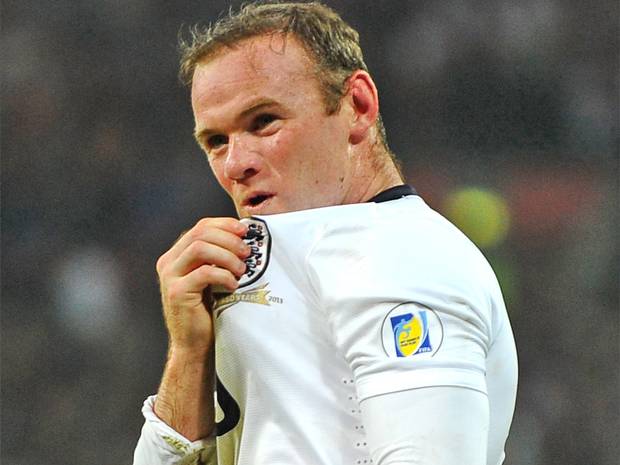
With that rant over, it’s on to another person fully aware of the riches that modern day football can bring, Wayne Rooney. It’s a bit of a strange time for old Wazza at present: 29 years old, freshly installed as captain of club and country and set to become record goalscorer for both – yet he appears to be losing support rather than gaining respect. It’s no longer just United fans tired of his errant control and contractual shenanigans who have lost patience, there’s now a growing clamour from the wider football public to see him dropped from the England team too.

With United, despite not being in agreement, I can at least see the point of view of those who insist he should have been overlooked for the captaincy and no longer considered an automatic first team choice. Rooney committed the cardinal sin of asking to leave the club (x2) and it’s true that in many games he seems to be in a terminal slump. Leaden footed, a shocking first touch, the over reliance on switching play by pinging the ball 40 yards out to the wing – his ability to lose possession whilst under little or no pressure defies belief at times. When he’s bad, he’s really bad.

But… and this is a big but… I’m still completely convinced that United remain a much stronger team with Rooney in it. Despite no longer possessing that electric burst of pace he had as a teenager, despite his penchant for giving the ball away – Rooney still makes a huge contribution to the cause. It’s what he still does now, it’s what he’s always done. You might wish him and Paul Stretford had got their move to Chelsea, you might think he’s a fat scouser who’s a disgrace to the shirt, you might simply detest everything about the bloke – but you can’t deny he’s not still a top player for Manchester United. He just is.

I read something the other week suggesting the captaincy was too much of a burden and he was now trying too hard, evidenced by him lambasting Tyler Blackett following one of goals at Leicester – apparently an effective leader shouldn’t be doing such a thing. What a load of nonsense. Rooney has been dealing out regular bollockings for the last 10 years. Last season, as results got worse and most senior players failed to show for the manager – Rooney remained on side. He was still talking, he was still cajoling, he was still contributing when others had made it pretty clear they no longer fancied it – that’s why he’s got the armband now.

Even when he isn’t playing particularly well, there’s still ample justification for Rooney keeping his place. Or, to put it another way, a Rooney bad game is worth more to the team than a Van Persie bad game. A growing consensus suggests he’s past it, but (and I’m sorry to have to resort to this) the stats don’t suggest that’s the case at all. Anyone bleating about Rooney would probably be quick to tell you that United or England would be better off served by somebody truly world class, say, for instance, Sergio Aguero. Well actually, (statto glasses on) it appears that since 2011, Aguero has played 93 games in the Premier League and scored 56 goals with 23 assists. Rooney’s record during that same period is 96 games, 59 goals and 32 assists – hardly the record of someone who’s no longer making a telling contribution.

Though gripes about Rooney’s form are nothing new at Old Trafford, quite why England supporters have decided to jump on board is something of a mystery – at least at United we have credible alternatives up front or in midfield. At international level, it appears to be more a case of Rooney bearing the brunt of fans’ frustrations with an ongoing lack of success; and the chronic dearth of players capable of challenging his nailed-on starter status. Is it really fair to blame Rooney for the current generation of England players being so incredibly average? Did Ronaldo get similar stick from the Portugese nation for earning astronomical money yet failing to carry their team beyond the World Cup group stages?

Given that England’s alternative is to call up the likes of Andy Carroll, Darren Bent or Rickie Lambert, I’m pretty sure Rooney will get plenty more chances to play and miss shedloads of chances before eventually surpassing Sir Bobby’s record of 49 international goals. The nation can then unite in belittling the achievement due to 90% of those strikes being against San Marino, before he then resumes scoring the goals that will make him the leading scorer in United’s history too – another milestone that’ll be greeted with seething resentment/complete indifference by many supporters.

Sometimes in the dead of night, when he wakes on a Luis Vuitton mattress stuffed with £50 notes, suffering with heartburn from eating too many burgers. Wayne probably takes a swig from his can of Fosters, scratches his head with nicotine stained fingers and thinks, “why do I bother?”

Copyright Red News – October 2014

www.rednews.co.uk

Clap Your Hands

image

The story of Happy Mondays is one that’s been attempted a few times, with much that has been written regurgitating the same myths and half truths that made the band so tabloid friendly during their pomp. Whereas The Stone Roses projected an air of insouciant cool and are regularly awarded ‘greatest debut album of all time’ plaudits, any mention of the Mondays tends to prompt memories of the cartoonish Shaun and Bez double act rather than any appreciation of the group’s talents or their lasting musical legacy.

Happy Mondays Excess All Areas – A Biography by Simon Spence (Aurum Press, £20) attempts to delve behind the legend and hearsay surrounding the two frontmen and instead tell the definitive story of the band as a whole. The format here is the same as Spence’s previous effort, the excellent The Stone Roses – War and Peace that was released a couple of years ago. Like that book, this latest is meticulously researched and based on many hours of fresh interviews with band members, family, friends, associates and numerous industry faces.

These first hand accounts enable Spence to present a detailed history of the band and paint a vivid (and often laugh out loud funny) picture of greyed out, 1980’s Manchester undergoing its transformation into Day-Glo, early 90’s Madchester. The story of Factory and Tony Wilson has been done to death in recent years, almost becoming an industry in itself – so it’s to the author’s credit that he manages to put a fresh slant on proceedings here. Indeed, one senses that Wilson didn’t really have much time for the band until key earners New Order went into hiatus just as the Mondays suddenly and unexpectedly blossomed into the most exciting rock and roll band on the planet.

Alongside the usual tales of hedonism and excess (nothing you’ve heard previously was exaggerated), Spence’s major achievement is how he skilfully evokes the visceral thrill of the Mondays’ music on those first 3 seminal albums. In spite of being out of control and fronted by a pair of drug-fuelled nutters, the band produced a cosmic slop of sound that was miles ahead of its time then, and still sounds startlingly original now. It made me want to go back and listen properly for the first time in 20 odd years, so I’ll conclude by recommending you pick up this excellent book and then do the same.

Copyright Red News – October 2014

www.rednews.co.uk